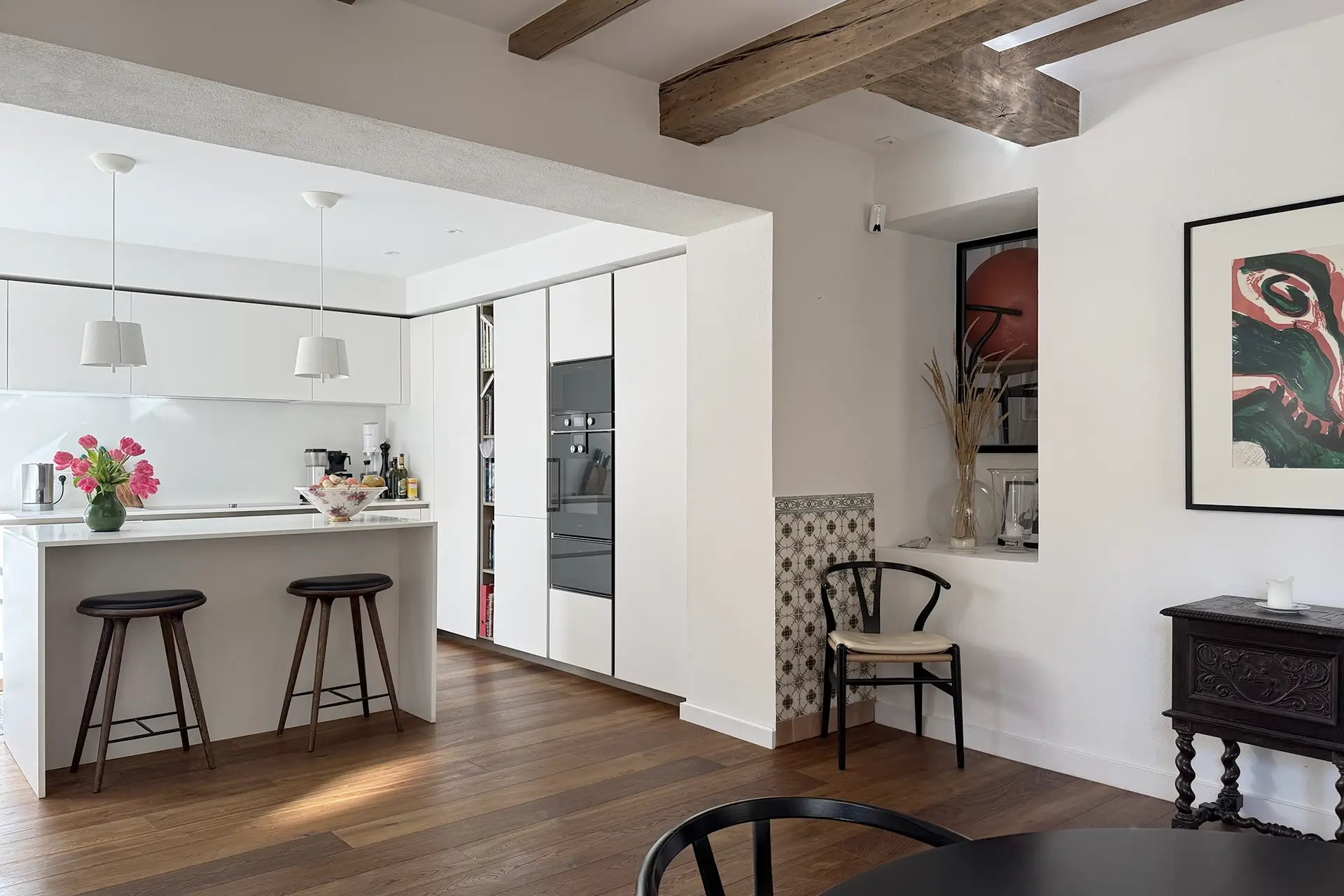
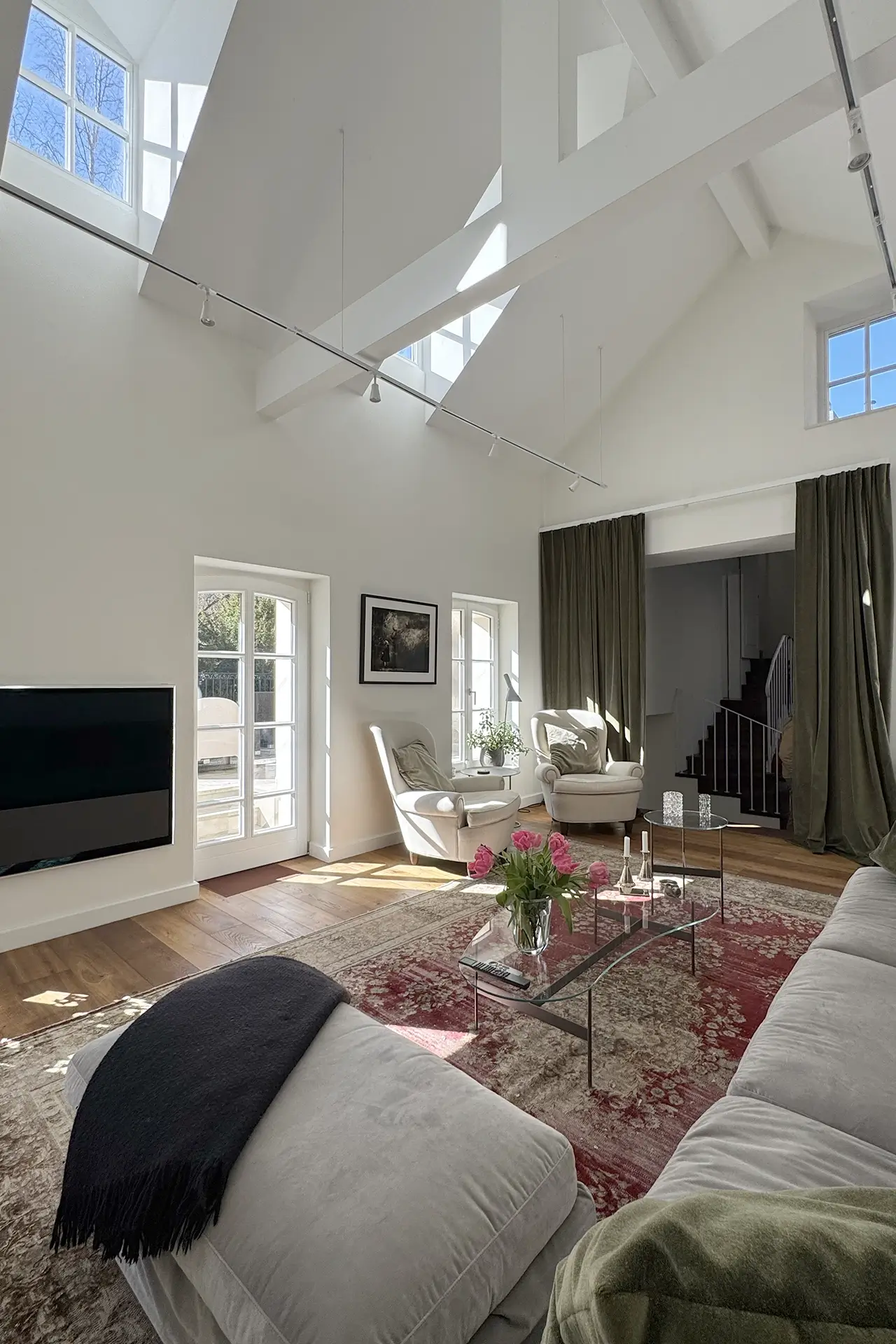
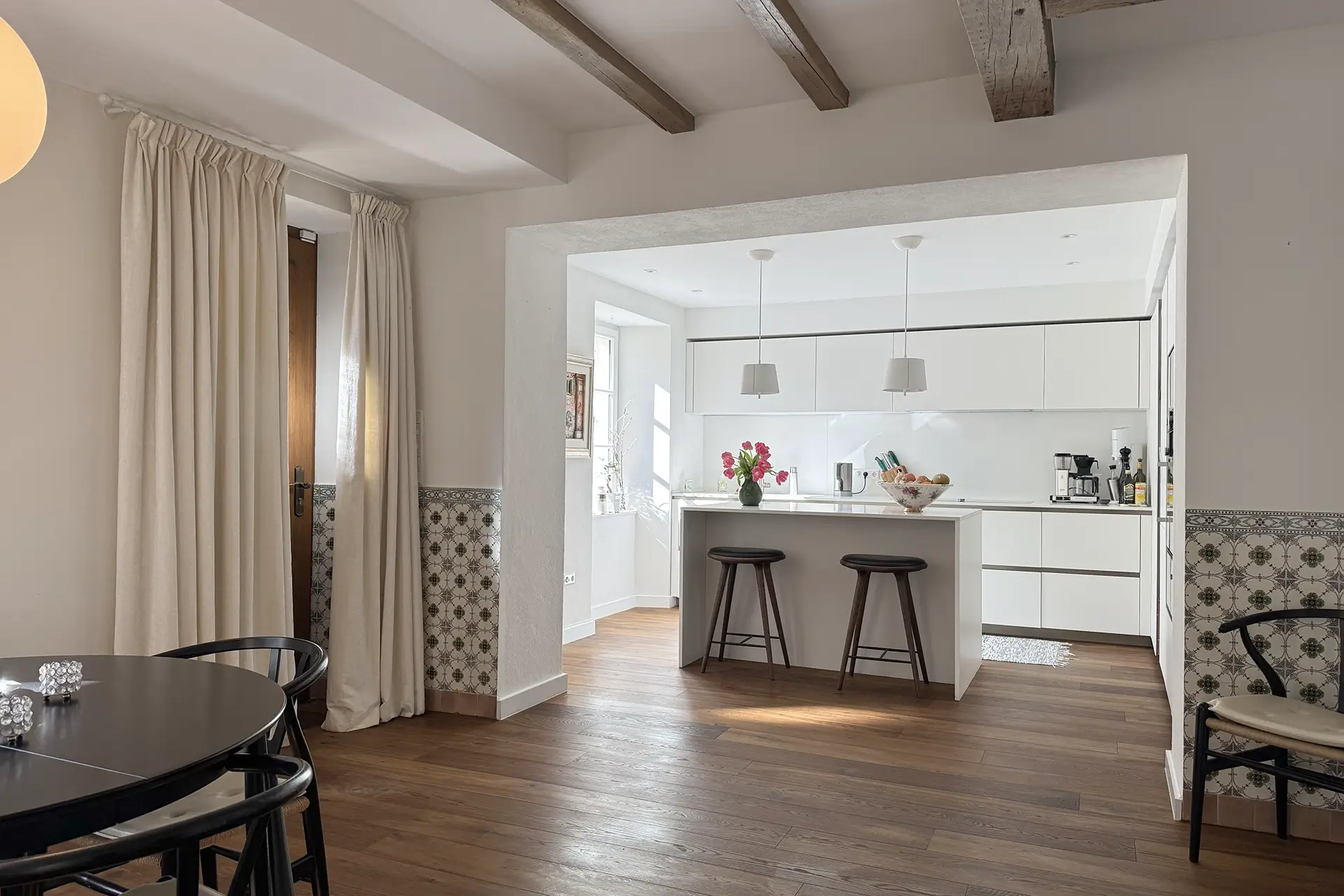
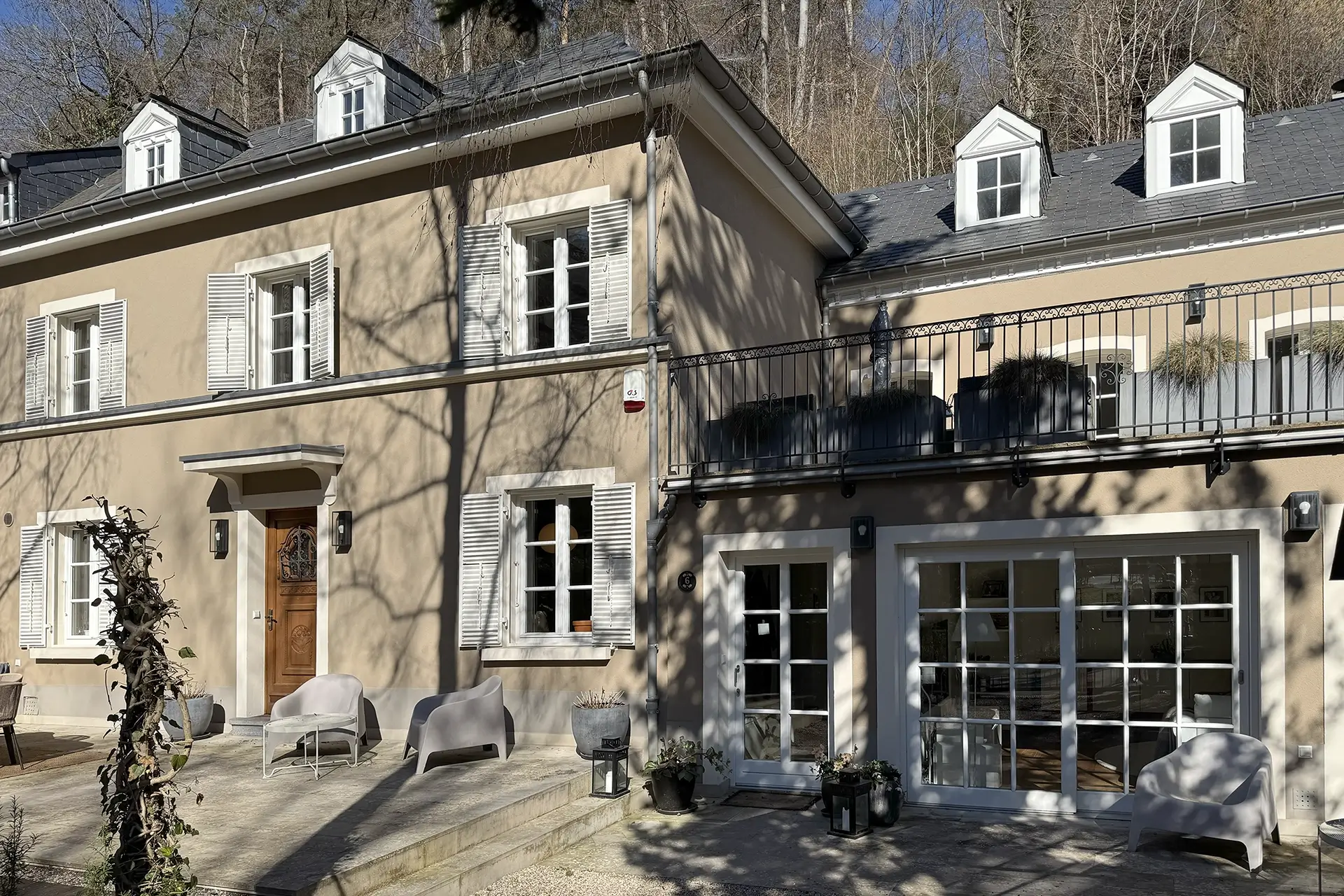
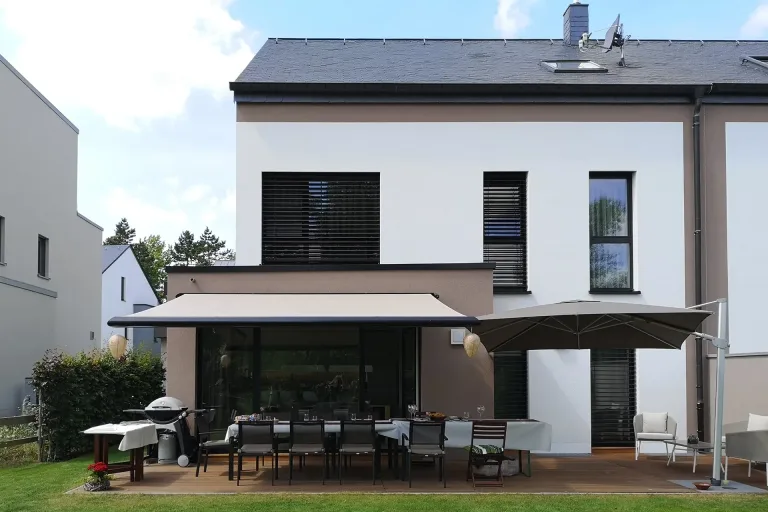
The original dwelling has retained its initial internal layout, while the conversion of the garage into a living space and the creation of a terrace on the upper floor have established a direct connection between the outdoor areas and the interior living spaces. Work on the exterior elements focused on preserving the existing authenticity, particularly the main door whose wrought iron motif served as inspiration for designing the new terrace balustrade. The project aimed to respect the constraints of the protected urban area while preserving the authentic character of this dwelling typical of its era, built in the 1780s.
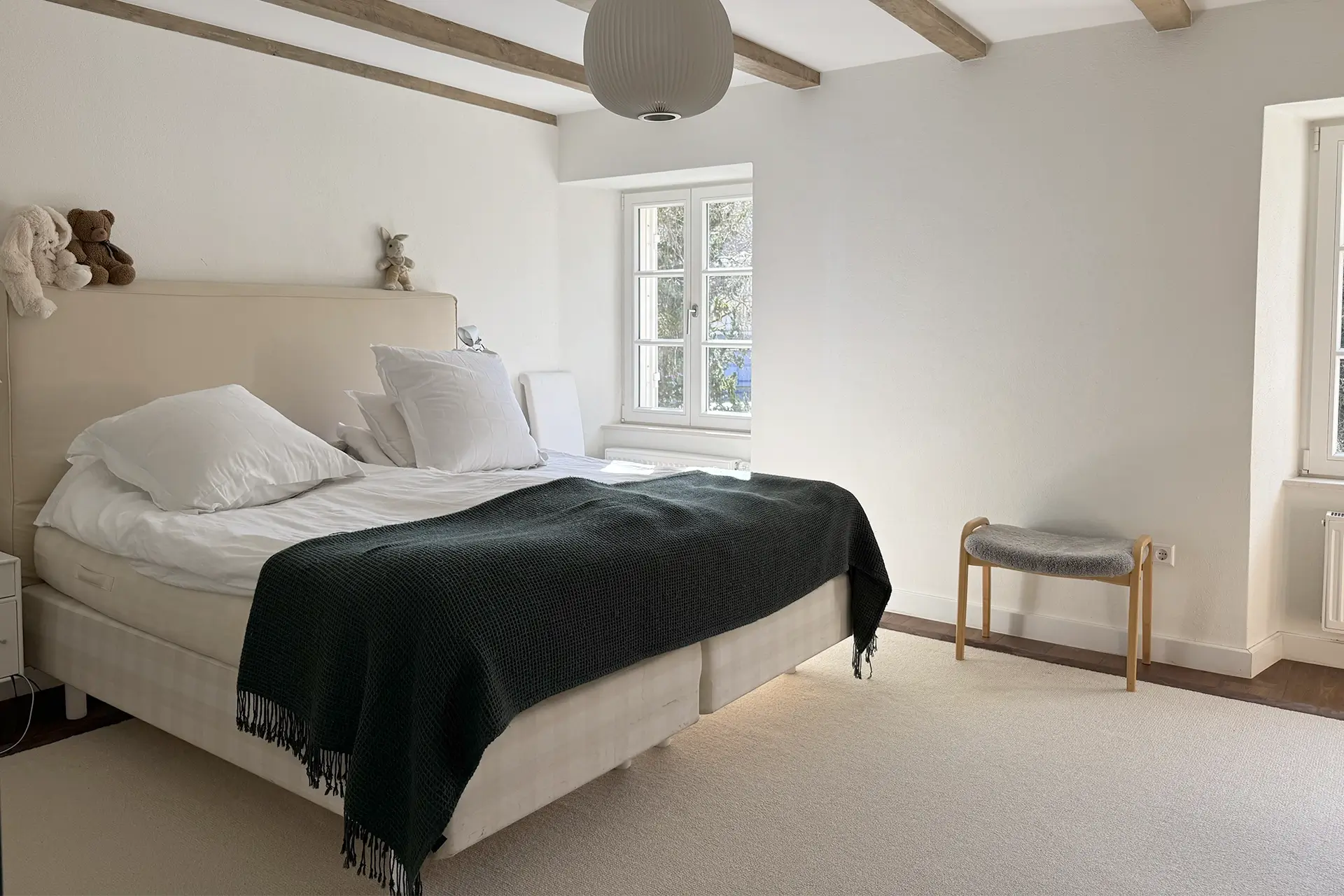
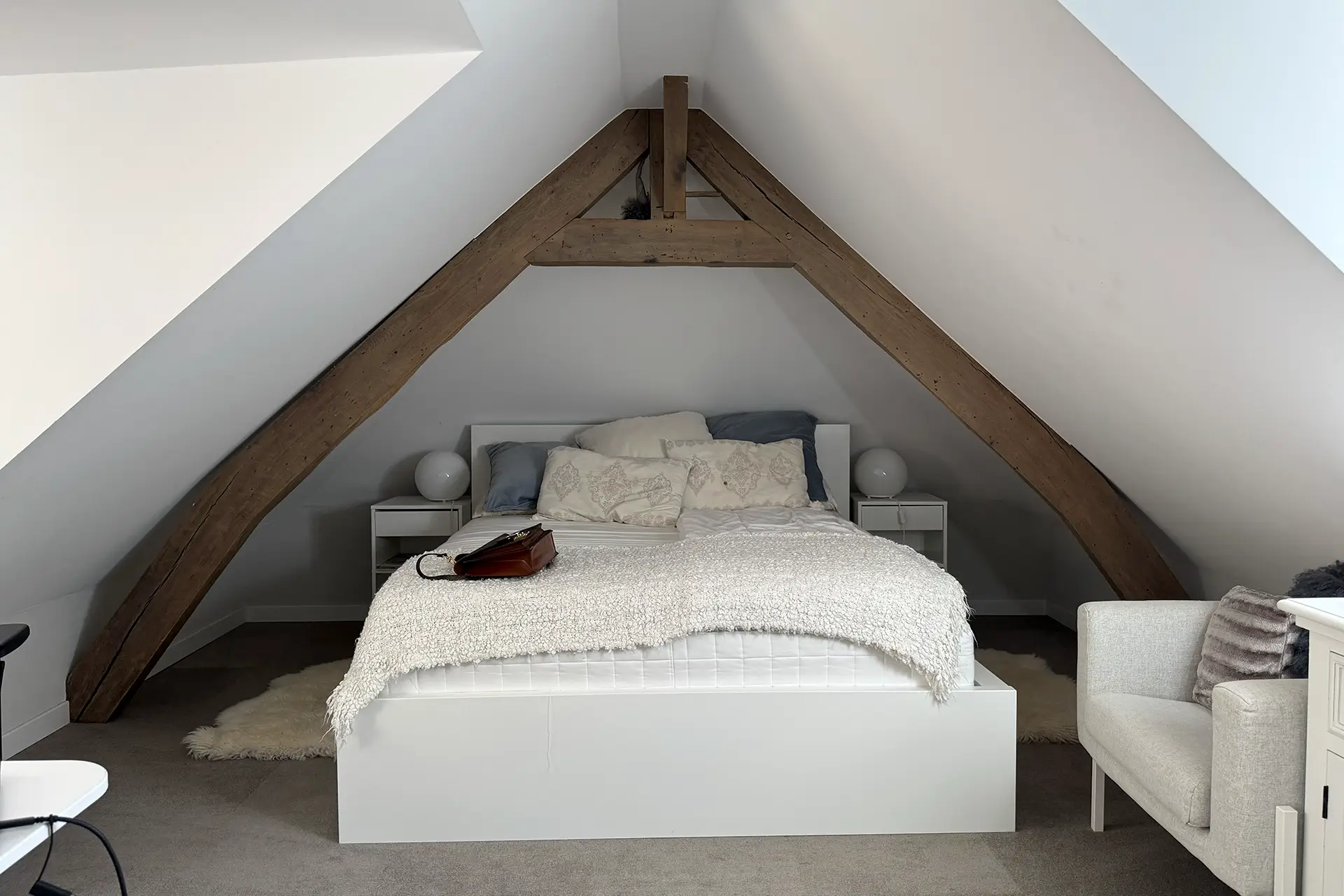
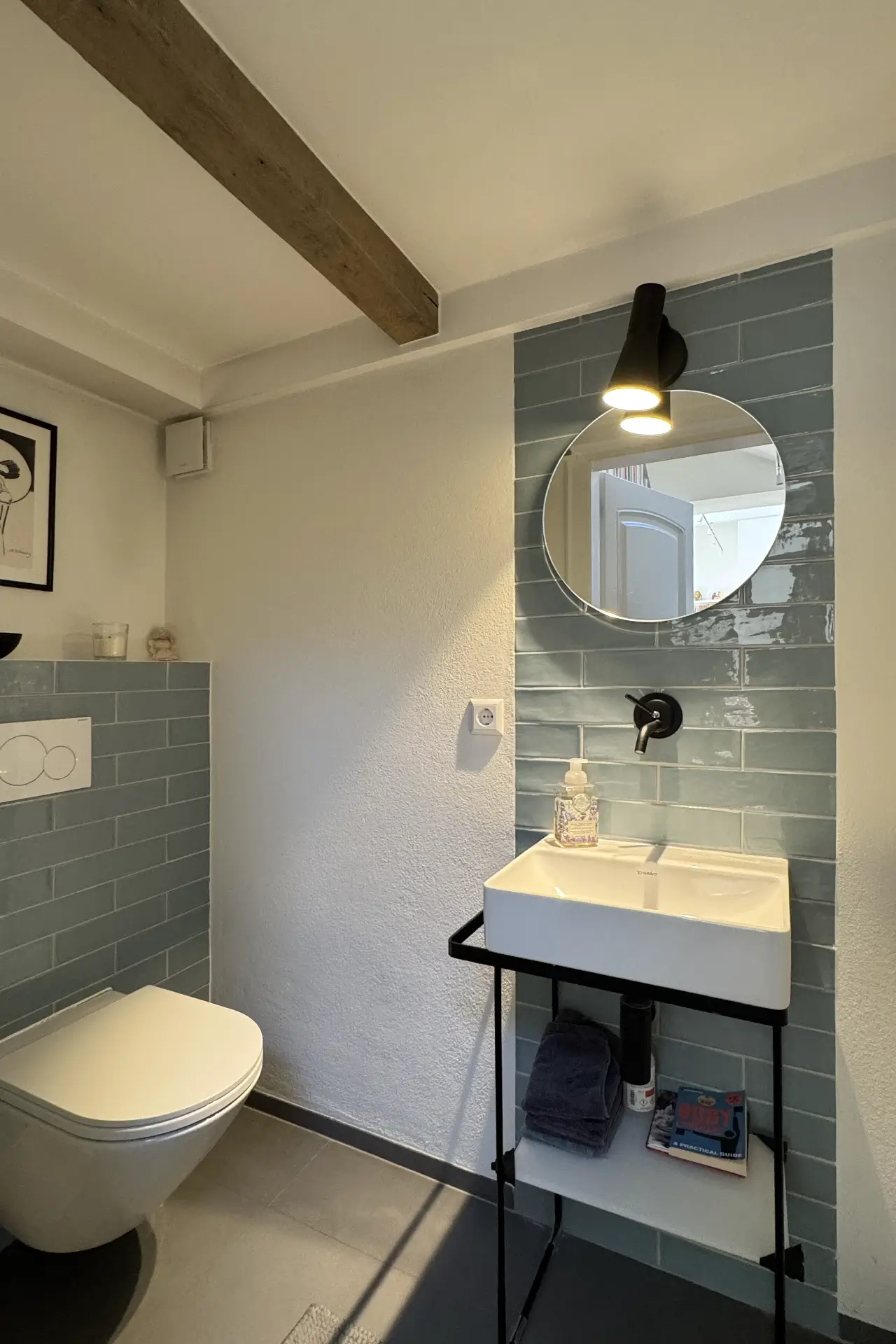
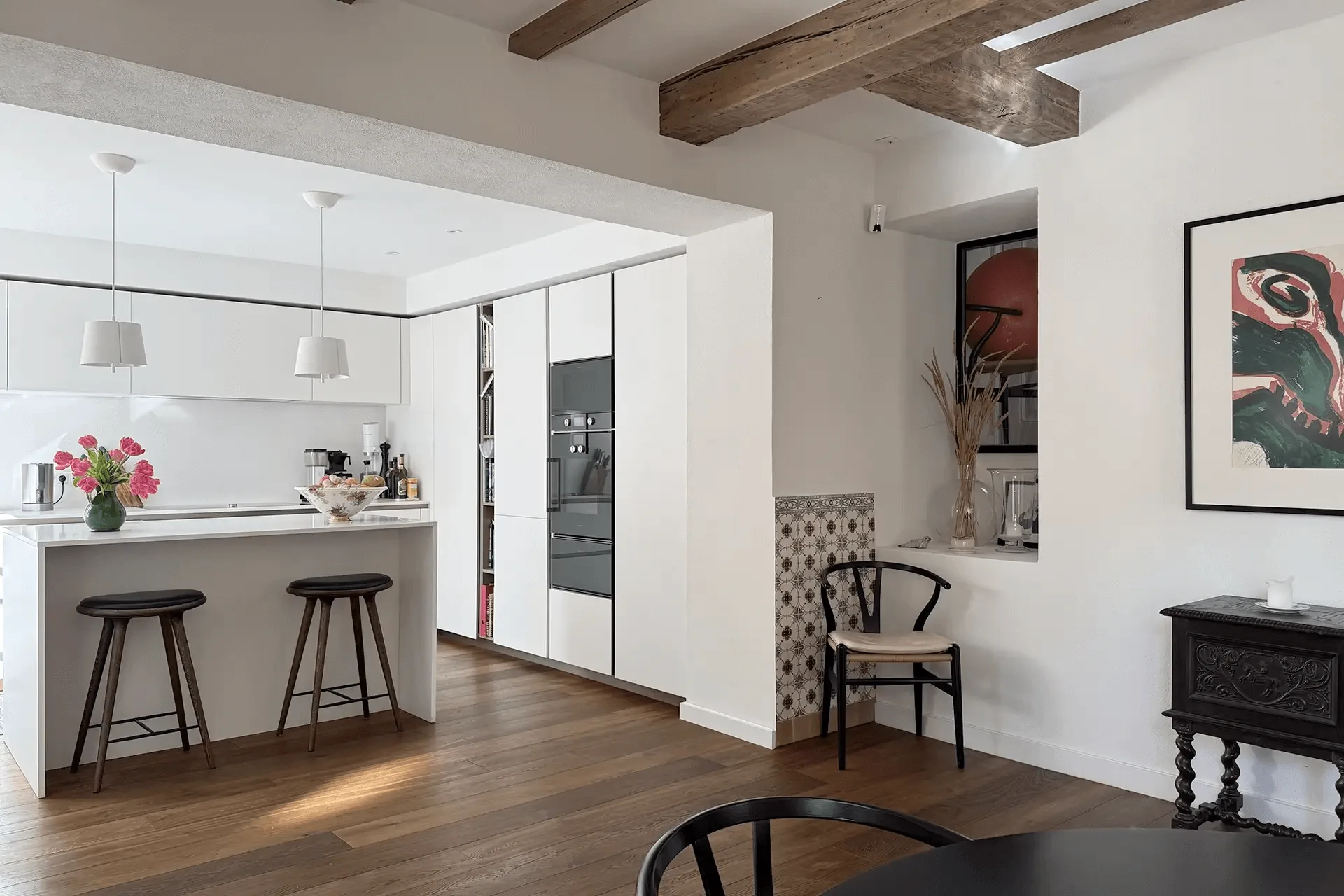
The objective consisted in enhancing the architectural volumes and rationalizing the use of spaces, while preserving the soul of the house. The owners wished to achieve stylistic coherence throughout all the bedrooms. Among their other expectations was the desire to have white walls combined with wooden flooring. Whenever feasible, the original floor covering as well as authentic elements were preserved.
The DAB authorization phase (Building Authorization Request) was carried out in collaboration with a partner architecture firm.
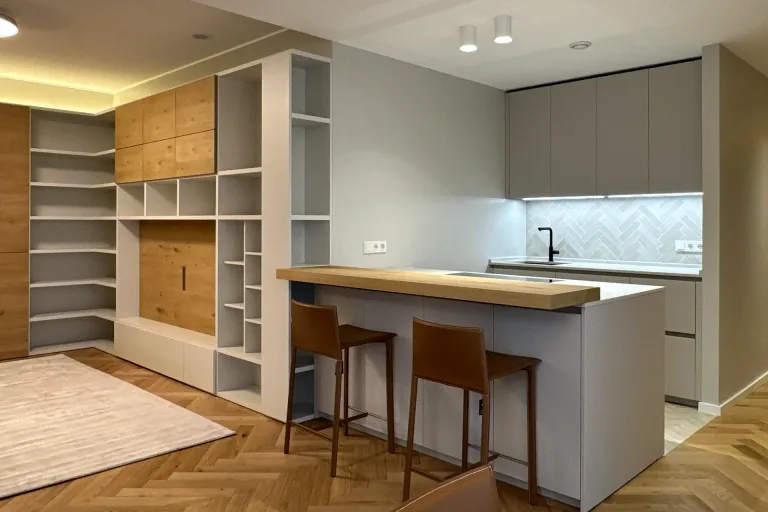
The clients wanted spaces that were as bright as possible and in their choice of furnishings, they favored palettes of light colors. The aesthetic approach adopted reinterprets the classic in a contemporary key, respecting the lines of the dwelling’s historical architecture, where the furnishings integrate harmoniously with the original volumes.
Location: Rollingergrund, Luxembourg
Client: Private
Area: 175.5 m²
Key features: