

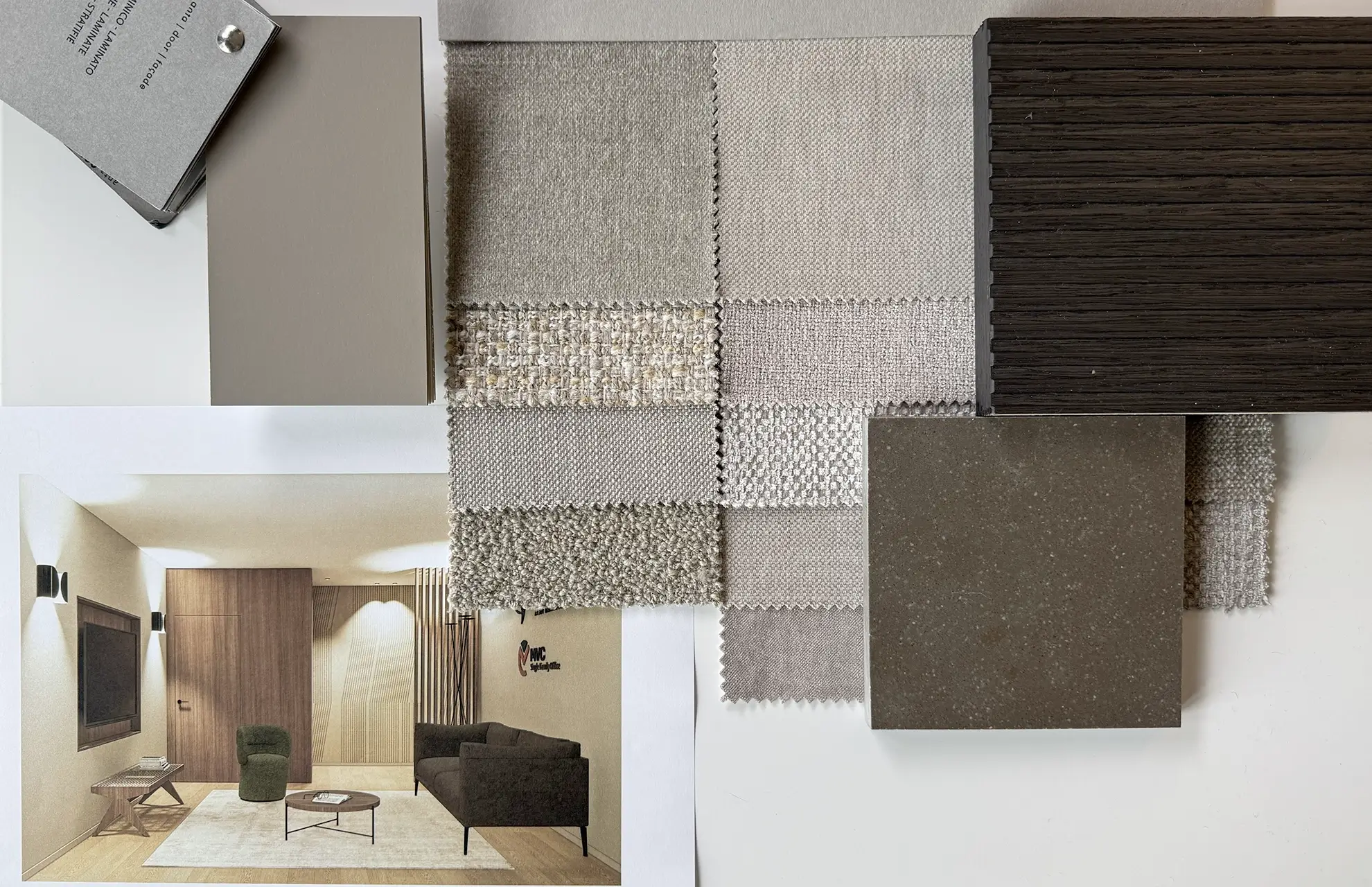
The mood board: a visual tool at the heart of interior design
A mood board, also called “planche d’ambiance” in French, “inspiration board” or “style board”, is much more than a simple collage of images. It’s a genuine design and visual communication tool used by interior architects, decorators, designers, but also by landscape designers, photographers and stylists to bring a vision to life before the project even begins.
What is a mood board concretely?
A mood board is a carefully orchestrated composition that brings together several visual and tactile elements:
- Inspirational photographs: furniture, lighting, accessories and artworks
- Material samples: fabrics, wood, stone, metals, wallpapers
- Color palettes: dominant shades, complementary tones and accents
- Textures and finishes: matte, glossy, satin, raw or polished
- Stylistic references: ambiances, atmospheres and aesthetic codes
In interior architecture, the mood board visually translates the universe of a project: it captures the essence of a space before its realization and allows everyone to immerse themselves in the future atmosphere of the place.
Why create a mood board for your project?
A bridge between vision and reality
The mood board plays a crucial role in the creative process. It allows:
For the client:
- Visualize the final atmosphere before the works begin
- Understand the stylistic choices proposed by the interior architect
- Validate or adjust the aesthetic direction of the project
- Ensure consistency between all elements (colors, materials, furniture)
- Make informed decisions about investments to be made
For the interior architect:
- Structure and refine the creative vision
- Communicate effectively with the client
- Create a guiding thread for all design decisions
- Avoid misunderstandings and disappointments
- Save time by quickly aligning expectations
The concrete advantages of a mood board
- Communication clarity: Words can be interpreted differently by different people. An image, a fabric sample or a color shade speak a universal language.
- Project consistency: The mood board ensures that all choices — from tiles to cushions — fit within the same harmony.
- Time and money savings: By validating the aesthetic direction from the start, costly and time-consuming backtracking is avoided.
- Permanent source of inspiration: Throughout the project, the mood board serves as a reference to maintain the creative direction.
- Project personalization: It integrates your tastes, your personality and your lifestyle into every detail.
When is a mood board used?
The mood board generally comes at the beginning of the design process, after initial discussions with the client and before creating technical plans. It’s a key step in interior architecture and decorating coaching services.
The creation process
- First meeting: Listening to needs, desires and constraints
- Creating the mood board: Visual translation of the project
- Presentation and adjustments: Refinement until achieving the desired atmosphere
- Technical design: Plans, elevations and detailed specifications
- Realization: Site supervision and material selection in accordance with the validated board
Mood boards for every space
Whether for a warm living room, a contemporary kitchen, a peaceful bedroom or an inspiring office, each room deserves its own mood board. Here’s an example:
Example: Mood board for a contemporary living room
This composition harmonizes:
- Neutral and warm tones (beiges, taupes, touches of terracotta)
- Natural materials (oak wood, linen, ceramic)
- Furniture with clean lines and refined details
- Layered lighting creating different atmospheres
- Carefully selected accessories for the finishing touch
The result? A space that breathes natural elegance and contemporary comfort, perfectly adapted to the client’s lifestyle.
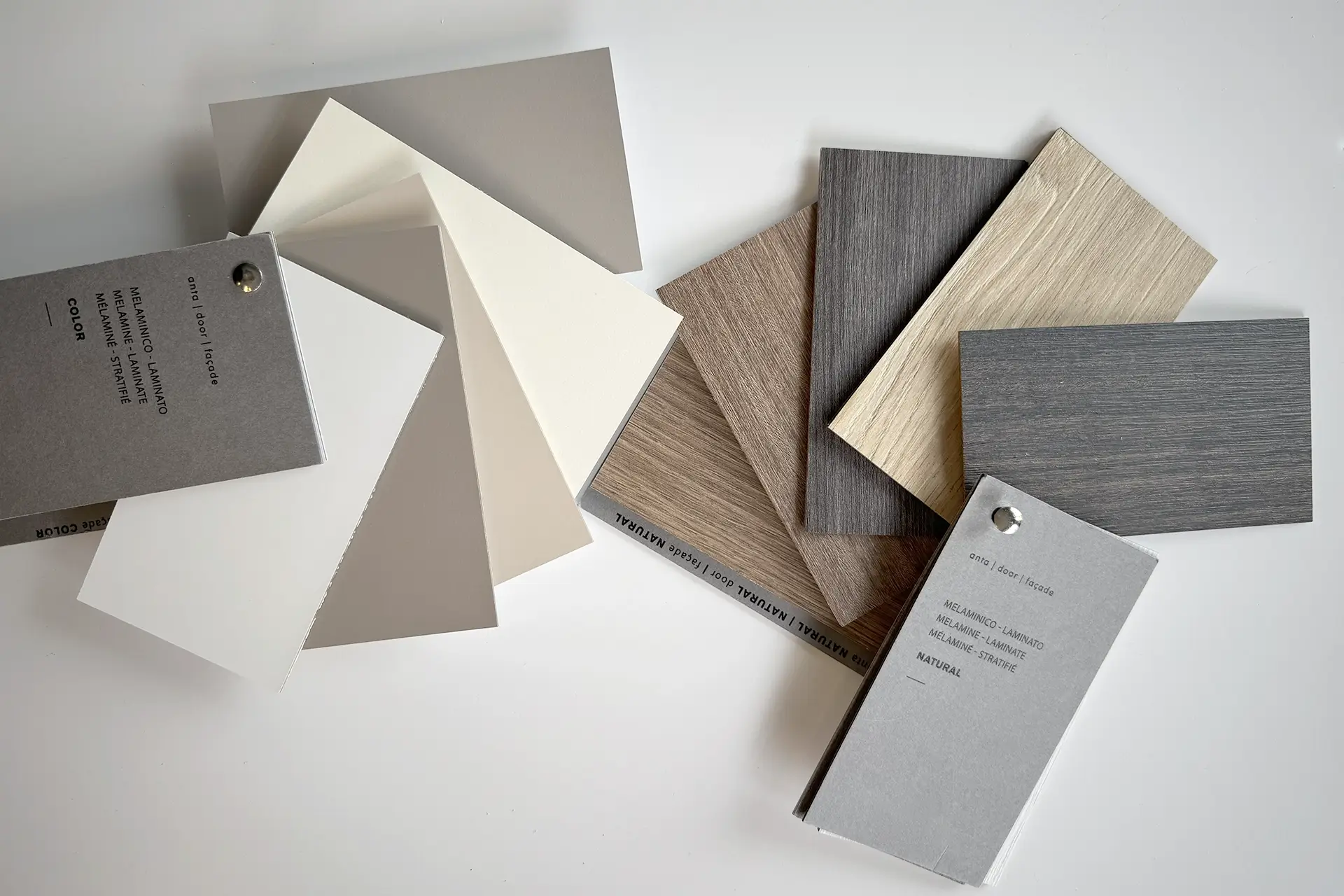
Digital or physical mood board?
Today, professionals often combine both approaches:
Digital boards: perfect for quickly exploring several stylistic directions and easily sharing initial ideas.
Physical boards with real samples: essential for validating textures, colors and materials in the actual light of the space. Nothing replaces the sensation of a fabric under your fingers or the exact shade of wood under natural light.
How to create a personalized mood board
The professional approach relies on attentive listening and sharp expertise:
- Style questionnaire: Identifying references, tastes and inspirations
- Space analysis: Taking into account natural light, volumes and existing architecture
- Creative research: Exploring trends, innovative materials and custom solutions
- Harmonious composition: Assembling elements to create visual coherence
- Presentation and dialogue: Guidance through each choice and adjustments according to feedback
A mood board goes beyond aesthetics
A professional mood board also integrates:
- Lifestyle: A couple with children doesn’t have the same needs as a single person or retirees
- Budget: Alternatives adapted to different price ranges
- Sustainability: Quality materials that stand the test of time
- Functionality: Beauty and practicality go hand in hand in every choice
The mood board is the exciting first step of your interior design project. It transforms your dreams into tangible images and lays the foundations for an interior that truly reflects you.
At Ideas Factory, we create custom mood boards for every project, whether it’s a complete renovation, a reorganization or simply a decorative update. Our experience in Luxembourg allows us to understand local specificities and propose solutions adapted to your environment.