

The kitchen is the heart of the home. This makes it essential to customize it according to the needs and habits of those who live there. Before starting the design process, you need to consider the room’s layout, particularly when planning a kitchen for a new construction where the arrangement isn’t already defined by walls, connections or doors.
But which option is better? An open kitchen that integrates seamlessly with the living and dining areas, currently trending thanks to its bright and welcoming atmosphere, or the classic closed version that emphasizes functionality and maintains a clear separation from other rooms?
While there’s no universal answer, this article presents the main advantages and disadvantages of both types.
What is a closed kitchen and what does it look like?
A closed kitchen is an independent room, separated from the rest of the living space by walls and doors. Typically, the kitchen is enclosed by four walls and a door.
Inside, you can choose an L-shaped configuration, a U-shape, or two parallel rows facing each other. The latter is a traditional and classic form, found mainly in older apartments and small to medium-sized homes.
Advantages and disadvantages of a closed kitchen: summary
| Advantages | Disadvantages |
|---|---|
| Greater storage space | Communication difficulties |
| Privacy | Poor overall visibility |
| Less odor and heat dispersion | Less flexibility |
| Reduced background noise | Lack of seating space |
| Limited access for children and pets | Feeling of a cramped space |
The advantages of a closed kitchen
Closed kitchens have proven their worth for many years. They offer concrete advantages that meet specific living needs.
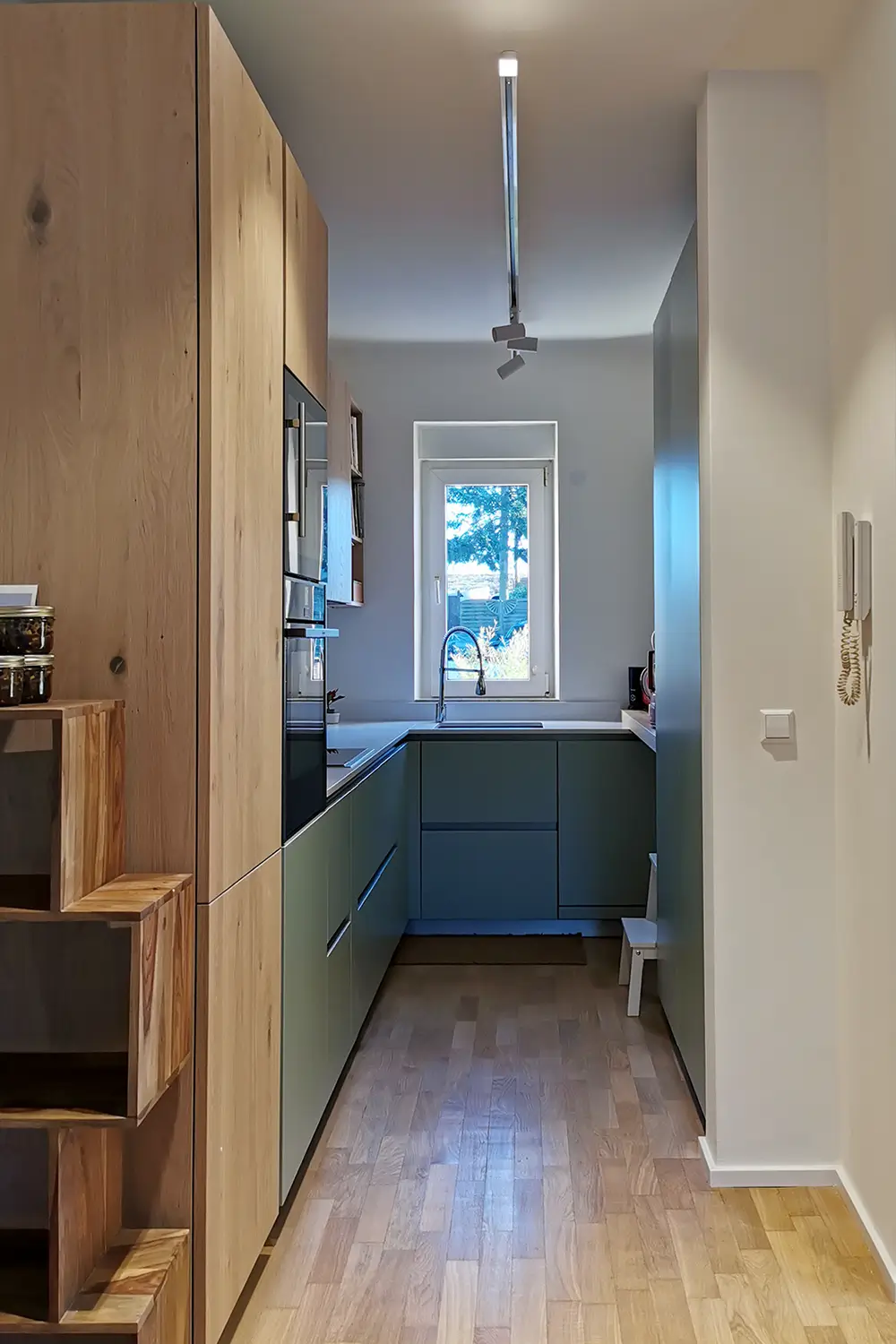
Project: Bonnevoie, Luxembourg
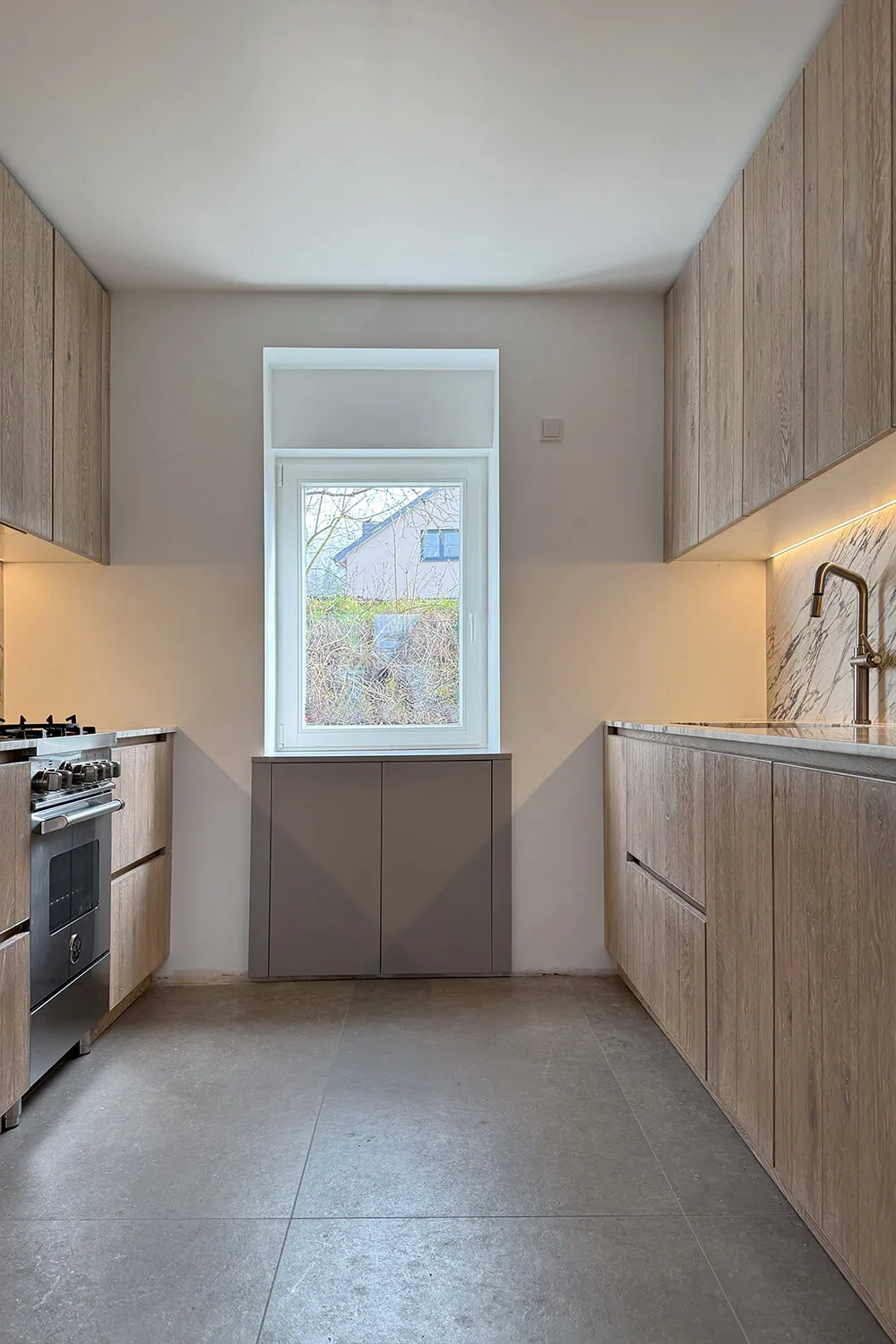
Project: Heisdorf, Luxembourg
More storage space
In closed kitchens, practicality is the main focus. Every available space is maximized and equipped with tall cabinets or wall units. Closed kitchens optimize storage space and offer a large capacity to store all necessary items.
Greater privacy
In the hectic pace of daily life or when guests arrive, you simply close a door and the kitchen mess is immediately hidden, along with dirty dishes and pots not put back in their place. For those who love peace and quiet while cooking, a closed kitchen protects from prying eyes.
Less odor and heat and humidity dispersion
A closed kitchen prevents intense odors, heat and humidity from penetrating other rooms in the home.
Background noise reduction
The coffee machine, the dryer, a running blender or the hood in operation: appliances and dishes produce a lot of noise in the kitchen. Closed kitchens ensure that noise is shielded from the rest of the house, allowing those in the living room to relax or read without disturbance.
No access for children and pets
A closed kitchen not only prevents the escape of odors and noise but also makes entry difficult for children or pets. This way, hot or sharp kitchen utensils are less likely to become a source of danger.
The disadvantages of a closed kitchen
The closed kitchen can prove impractical in some aspects. Here are the typical disadvantages:
Communication difficulties
For many, isolating themselves in a closed kitchen can undermine communication and conviviality. When you have guests or roommates, a closed room can limit socialization while cooking.
Poor overall visibility
Depending on the position and layout of the kitchen, the closed room can limit the view of the rest of the house. While it’s true that a closed kitchen limits children’s entry, it can make it difficult to keep an eye on them while cooking.
Less flexibility
Doors and windows can limit design flexibility and mean that you have little freedom in arranging cabinets and appliances.
Lack of seating space
In closed kitchens, it’s usually not possible to integrate additional elements such as islands, counters or large dining tables, as space is limited both in the center of the room and along the walls.
Feeling of a cramped space
When the door is closed and the room is small, a closed kitchen doesn’t give the impression of being airy and welcoming but almost oppressive.
Project; Kirchberg, Luxembourg
Parallel kitchen transformation
What is an open kitchen and what does it look like?
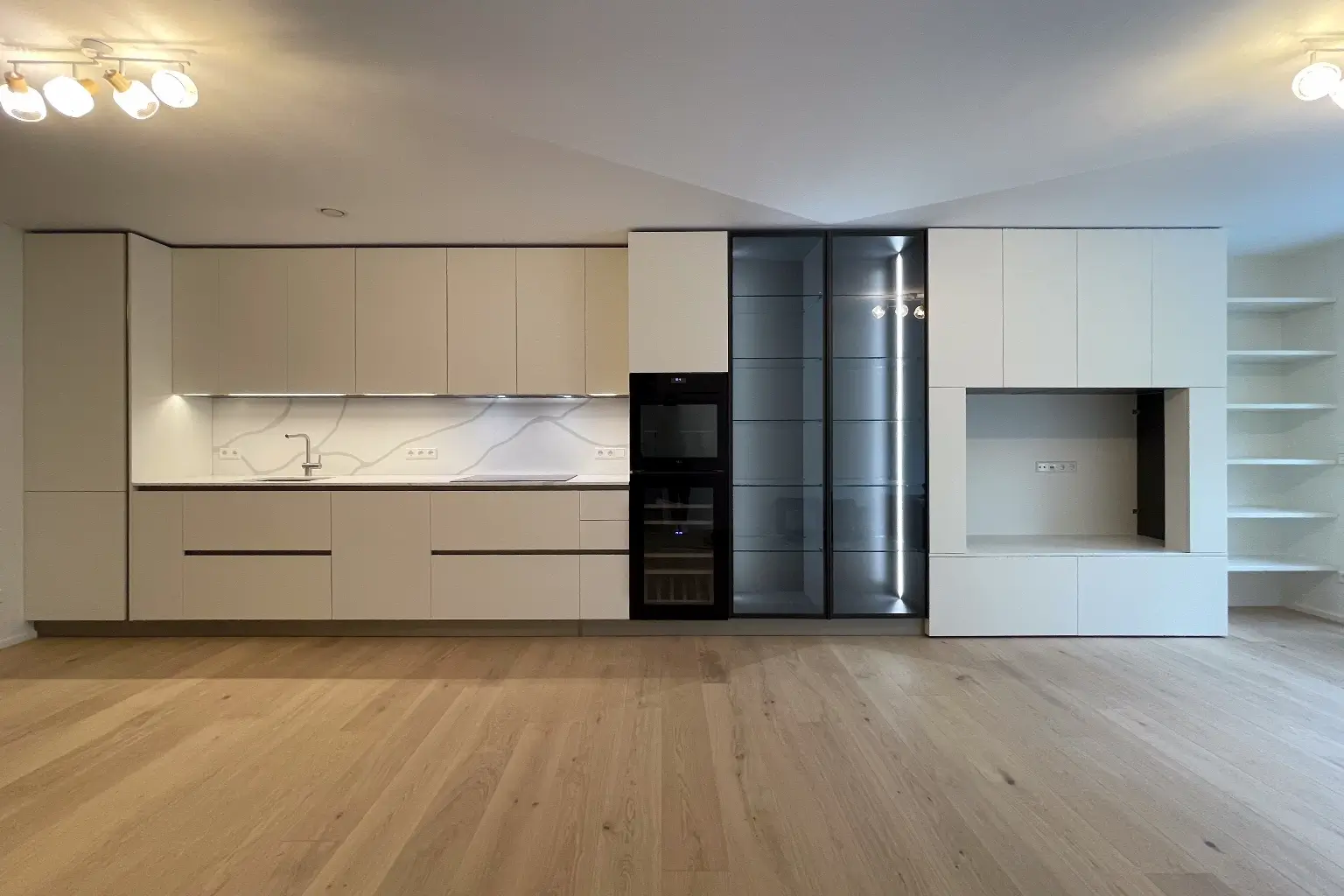
Unlike a closed kitchen, an open kitchen isn’t separated by walls and usually flows seamlessly into the dining area and often also into the living room. This creates an airy and modern environment, often present in new constructions. To visually separate at least the cooking area from the rest of the room, kitchen designers use islands and counters or a contrasting color.
Advantages and disadvantages of an open kitchen: summary
| Advantages | Disadvantages |
|---|---|
| Easier communication | Clutter builds up more quickly |
| Better visibility | Less storage space (generally speaking) |
| Airy atmosphere | No protection from odors, heat and noise |
| Efficient use of space | Increased risk for children and animals |
| Design focus | Greater planning effort and costs |
The advantages of an open kitchen
Open kitchens are trending. Here are the main advantages of this model:
Easier communication
When choosing an open space kitchen, it’s usually for the sociability that this design entails. Thanks to the absence of walls, it’s possible to communicate with roommates or guests even while cooking.
Better visibility
An open kitchen allows you to keep an eye on children and pets, providing a clear view of everything happening while you cook.
Airy atmosphere
An open kitchen has many more opportunities to benefit from multiple light sources, particularly from living room windows. It’s therefore brighter and appears airy, spacious and welcoming.
Efficient use of space
An open kitchen offers greater flexibility in terms of layout, as you don’t need to consider particular constraints such as columns, doors or walls. You have greater freedom to place kitchen elements anywhere in the room.
Design focus
Since there’s no separation between the living area and the kitchen, open space kitchens appear less functional, less like kitchens in the strict sense. A detail appreciated by lovers of clean and minimalist interiors.
The disadvantages of an open kitchen
Although open space kitchens are very modern, they’re not suitable for all lifestyles. Here are the main disadvantages:
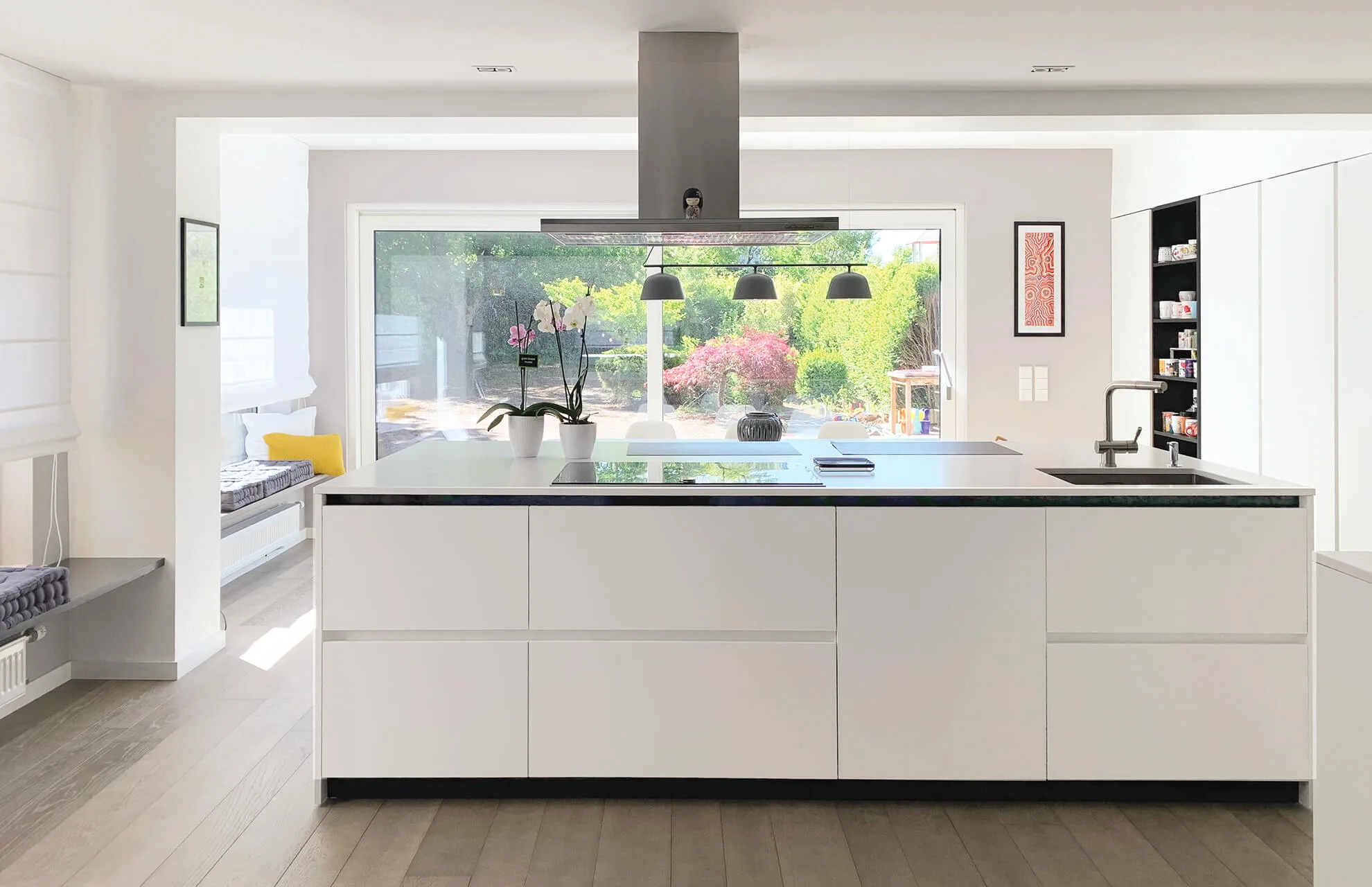
Project: Cents, Luxembourg
Clutter builds up more quickly
With an open kitchen, you have a better view outward, but the cooking area is also always visible from there, along with the dirt and clutter that can arise during food preparation. Even small appliances like toasters and kettles can ruin the clean appearance of the space if not put away immediately after use. In busy daily lives, it’s not always possible to tidy up immediately.
Less storage space
This is generally true, but a well-designed and large open kitchen can identify valuable storage spaces even without walls.
No protection from odors, heat and noise
The lack of walls means that odors, heat and noise can spread unfiltered into adjacent rooms. Although high-quality hoods largely contain odor diffusion, they cannot eliminate the intense odors of roasted meat, fish or pungent spices.
Increased risk for children and animals
Unlike a closed kitchen, in open kitchens you cannot close the door behind you. This not only results in a lack of privacy but can also mean that children and pets have easy access to food and sometimes dangerous appliances.
Greater planning effort and costs
To integrate a kitchen into the living area, both visually and functionally, the design effort and associated costs are usually higher. This is also because we’re talking about larger dimensions. Additionally, quieter appliances such as range hoods or dishwashers may involve extra costs.