

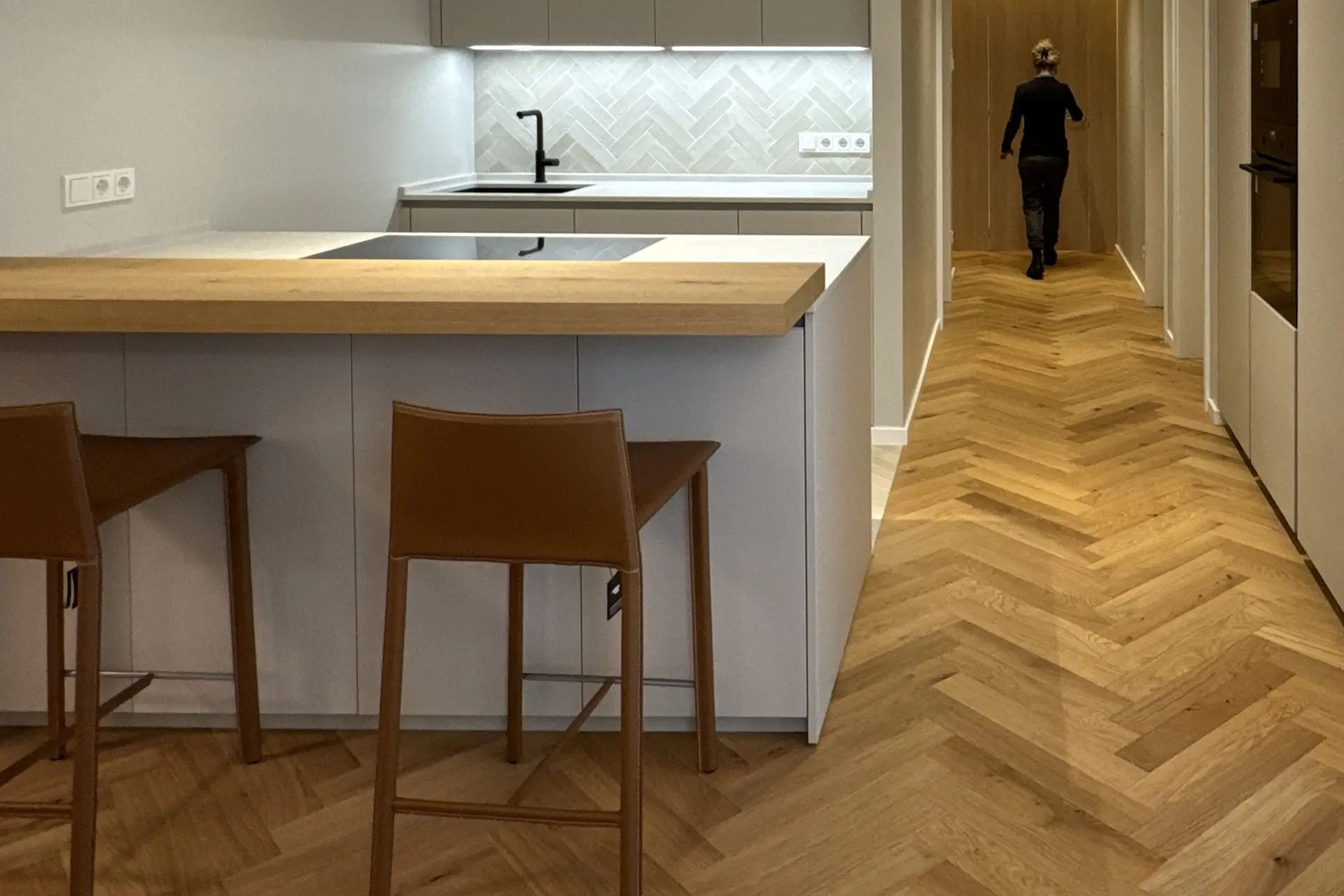
Wooden flooring is an elegant floor covering available in various forms and finishes. Here’s a comprehensive overview of the main types of flooring, including selection tips. Among the advantages of wooden floor coverings, we highlight excellent thermal insulation, acoustic insulation, and wear resistance. Besides creating a warm, elegant, and welcoming atmosphere in every room, wooden flooring boasts an exceptionally long lifespan: a simple sanding is all it takes to completely renew it.
Index:
- Solid Wood Flooring
- Engineered Wood Flooring (Multi-layer)
- Laminate Flooring
- Finishes and Treatments
- Installation Techniques
Solid Wood Flooring
This premium floor covering is made entirely from solid wood, without any layering. It consists of a single piece of wood. Due to its raw wood structure, which will later be sanded and polished, manufacturers typically choose wood species characterized by hardness, stability, and resistance. Solid wood flooring (or traditional flooring) is primarily composed of 99% raw wood, requiring sanding and polishing. Harder woods are preferred for manufacturing solid flooring, as resistance, particularly in terms of stability, is essential. However, characteristics vary depending on the wood type used, since each species presents specific properties in terms of hardness and resistance to environmental variations. Additionally, considering the wide range of tones, colors, and grain patterns available, you can choose from the following raw wood flooring variants:
- Light-colored flooring (fir, maple, oak, beech),
- Brown flooring (iroko, teak, olive, walnut, and acacia),
- Red flooring (cherry, doussié, merbau),
- Dark flooring (wenge, jatoba, kosipo)
The transformation and drying of solid wood requires considerable time, which means that furniture or flooring made entirely from solid wood will have a very high cost. Weight and the presence of impurities such as knots or small cracks are also disadvantages. Solid wood surfaces are “living” and will tend to crack or warp over time. Regular maintenance is required. The thickness of this wood type varies from a minimum of 10 mm and can reach up to 22 mm. Solid wood flooring represents approximately 30% of the flooring market.
Engineered Wood Flooring (Multi-layer)
This flooring is composed of multiple layers of wood, with a top layer of noble wood (oak, teak, ash). It costs less than solid wood while offering an excellent compromise between aesthetics and durability. Suitable for underfloor heating systems, it resists humidity and temperature variations better, making it more stable than solid wood flooring. The thickness varies from a minimum of 9 mm and can reach 21 mm. Multi-layer flooring allows for the creation of large planks, reaching up to 5 meters in length and 33 cm in width.
Increased stability is achieved through counterbalanced planks with noble wood, meaning planks where the top layer is noble wood, followed by an intermediate layer, and finally an additional bottom layer of noble wood. A three-layer structure provides maximum stability to the plank, regardless of the wood type used. The different layers absorb each natural movement of the wood while allowing the proper elasticity of the plank, which is subject to environmental stresses (temperature changes, underfloor heating, air drying).
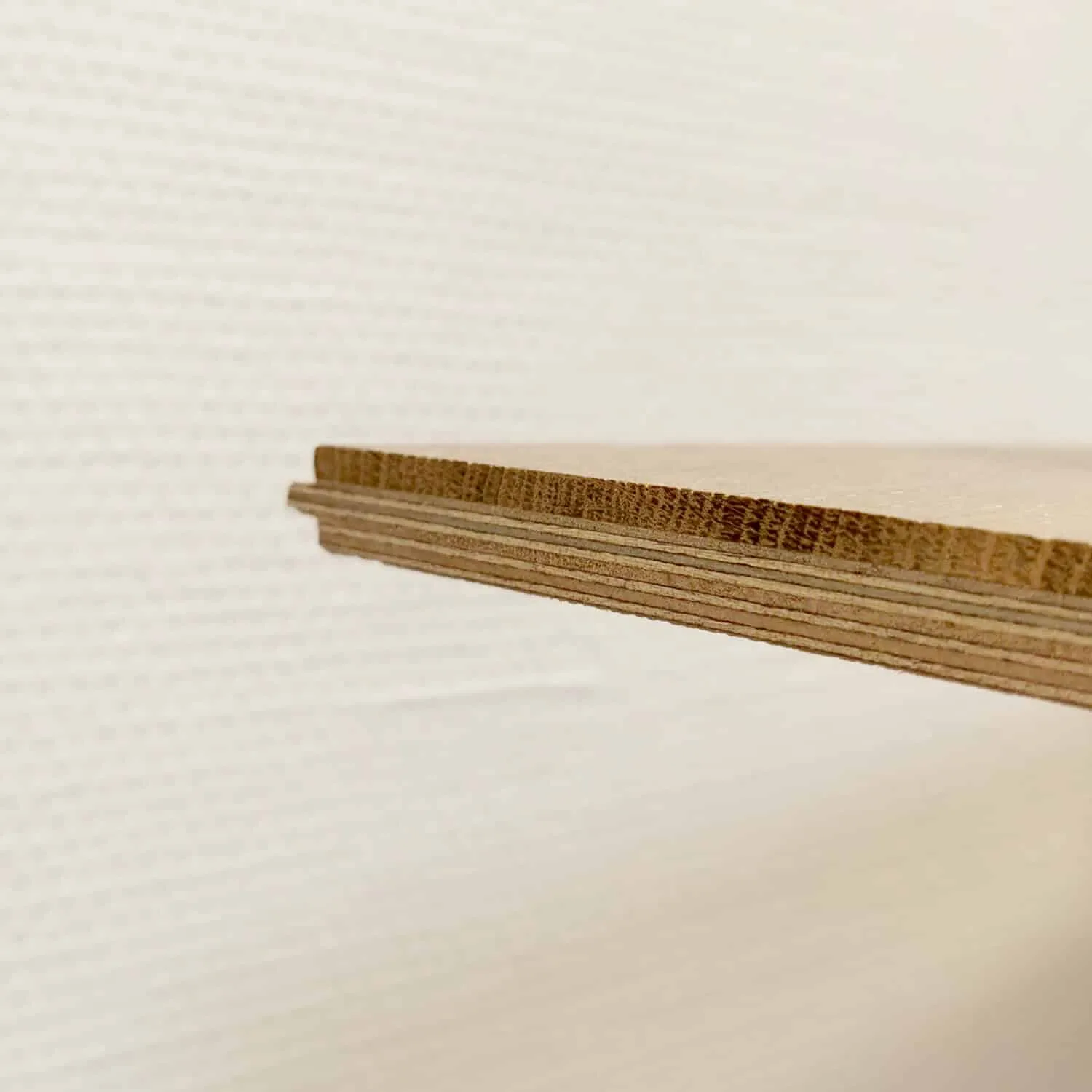
This solution is the best alternative to traditional solid wood (single-layer) and allows working with large-sized planks, both in width and length, while guaranteeing maximum stability over time and perfect flatness. However, this doesn’t mean that all multi-layer flooring is of the same quality. Our advice is to choose flooring with a top layer of noble wood that’s thicker than the market average of 2.5 – 3.5 – 4 mm. It’s also important to avoid bottom layers made with pre-composite materials such as plywood, peeled wood, or lightweight two-layer wood.
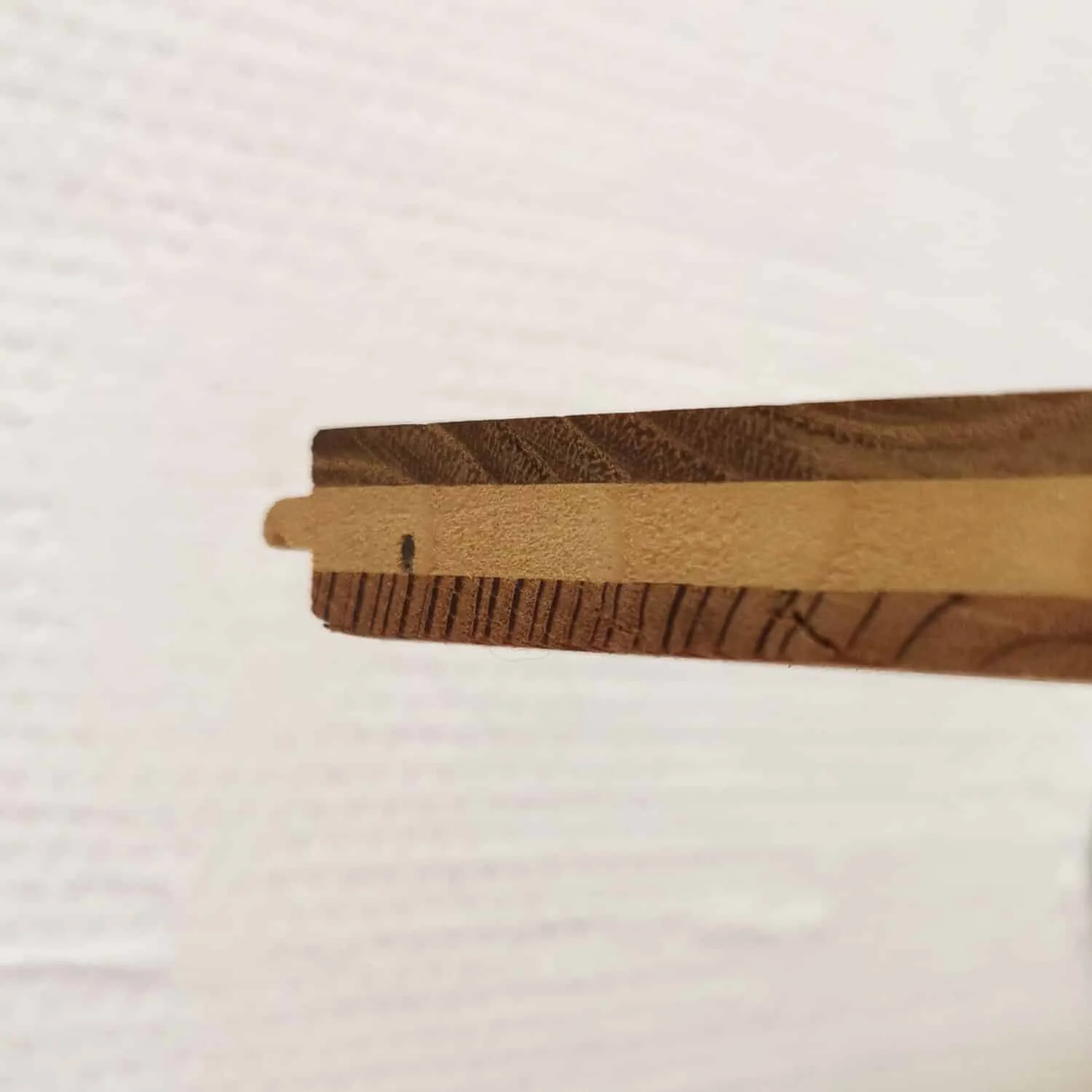
The best solution is flooring composed of three layers of solid wood: the first layer of noble wood, with a thickness of 4.5 – 5 mm, offers good wear resistance; the second layer in solid fir guarantees stability and structural consistency; and the third layer, a 5 mm noble plank in oak, larch, or other precious woods, counterbalances and absorbs the natural adjustments of the wood.
Two Examples of Multi-layer Flooring in Comparison
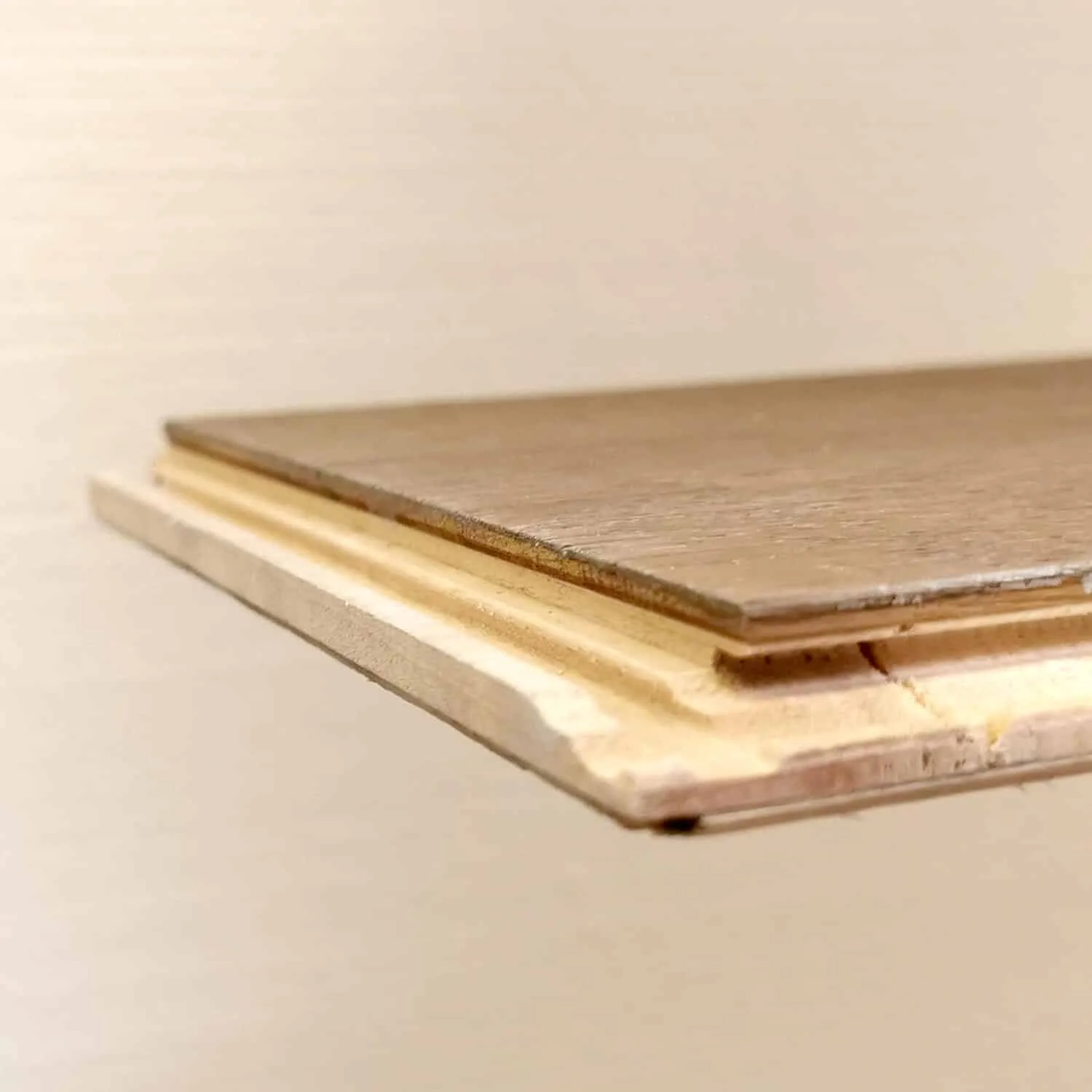
In the first photo, you’ll notice a thick noble layer of 5 mm. In good quality engineered flooring, this should never be less than 2.5 mm. A noble layer that’s too thin prevents sanding and reduces the flooring’s durability. It’s also crucial to pay attention to the other layers. MDF layers should be avoided, as they don’t guarantee stability or consistency. The second photo shows an economical, low-quality 3-layer engineered flooring.
A valid alternative is the two-layer structure, used for medium-sized boards (up to 2 meters in length). This solution follows the same production processes as three-layer flooring, but with a difference in the bottom support. We recommend choosing a high-quality birch plywood backing layer, cross-laminated for better resistance. This is a more economical solution that, if purchased from the same supplier, guarantees the same aesthetic surface finish. It’s possible to choose three-layer flooring for one living area (for example, the living room) and two-layer flooring for another area (for example, the bedroom).
Laminate Flooring
This is a wood imitation made from composite materials. It’s not real wood, and this difference can be perceived by sight, touch, and sound. Despite the best imitations, laminate will never manage to reproduce the materiality and purity of wood. It’s affordable and easy to install (floating installation), but it cannot be refinished and is less aesthetically pleasing than genuine wood.
| Flooring Type | Characteristics | Disadvantages |
| Solid Wood Flooring | Made entirely from solid wood – Very durable – Requires sanding and polishing – Thickness of 10 to 22 mm | High cost – Can crack or warp over time – Requires regular maintenance |
| Engineered Wood Flooring | Multiple layers of wood with a top layer of noble wood – Less expensive than solid wood – Compatible with underfloor heating – Increased stability | Variable quality depending on layer composition – May require attention to backing materials |
| Laminate Flooring | Wood imitation based on composite materials – Affordable and easy to install (floating installation) | Not real wood – Cannot be refinished – Less aesthetically pleasing than genuine wood |
Finishes and Treatments
Varnish
A transparent protective layer that makes the flooring more resistant to scratches and stains. It’s easy to maintain, as surface cleaning is sufficient, but the wood may lose some of its natural warmth and feel. Varnish forms a barrier on the wood, which reduces the material’s breathability.
Oil
This finish penetrates deeply into the wood, nourishing the material while preserving its natural appearance and authentic feel. Unlike varnish, oil doesn’t form a film on the surface, allowing the wood to breathe. However, maintenance is more frequent and sometimes requires re-impregnating the wood to preserve its luster. Oil is ideal for interiors where you want a warm and natural atmosphere.
Wax
Wax is a traditional finish that gives flooring a satin and natural appearance. It offers protection against humidity and dirt, although less resistant to scratches than varnish. Waxed flooring is more sensitive to wear and must be maintained regularly, particularly with additional wax applications to preserve its luster. Wax allows the wood to maintain a very soft feel and certain depth in colors. However, it may require more frequent maintenance, especially in high-traffic areas.
Installation Techniques
The subfloor can be composed of different materials (the most common being cement, while other materials used include wood-based panels, sand, pre-existing floor coverings, etc.).
The cement subfloor, with a minimum thickness of 5 cm, requires a certain hardening and drying time (from 15 to 90 days), which can vary depending on the cement type, thickness, and site conditions. It must sound solid, be homogeneous, and have uniform thickness over its entire surface. The surface must not produce dust and must not show halos or moisture stains.
To preserve the longevity and integrity of the flooring, it’s essential to perform installation after completion of all construction work, in a closed and climate-controlled environment.
Glued Installation
This technique involves laying the wood planks by gluing them to the substrate. After choosing which side of the room to start from, proceed with laying the first planks by orienting the male tongue toward the wall. Using spacers, the flooring must be spaced from the wall by approximately 8 to 11 mm around the entire perimeter, a space that will later be covered by a baseboard of at least 15 mm (in the case of underfloor heating, spacing from walls and a baseboard of sufficient thickness are essential to allow the wood to expand).
It’s advisable to dry-lay a few rows of wood planks to facilitate board arrangement, evaluate lengths and widths, and make any necessary cuts at the end of runs. Then, rearrange the pre-assembled rows by stacking them in order, just outside the installation area, then spread the appropriate glue evenly using a trowel.
At this stage, you can proceed with laying the elements, taking care not to soil the visible surface with glue, and using soft tools, a rubber mallet, and a suitable spacer to avoid damaging the flooring edge.
Floating or Free Installation
Floating installation, also called free installation, involves laying wood planks on a mat or underlayment, gluing them only at the joints. This type of installation allows the entire installed surface to “float” while remaining united during the wood’s natural adjustments.
It’s necessary to prepare the substrate with a mat made of expanded material or 2 mm thick felt, to standardize the flooring’s contact with the laying floor and prevent the formation of areas with different acoustics.
After choosing which side of the room to start from, lay the first plank by orienting the female tongue toward the wall. It’s recommended to space the flooring from the wall with spacers by approximately 10 mm.
Nailed Installation
This method is longer and more expensive than glued installation, and requires great experience and dexterity. The planks are fixed to the floor using nails. The planks must have a minimum thickness of at least 18 mm. Once the work is completed, the flooring is distinguished by characteristic creaking, typical of rustic or wooden houses.

Do You Need an Interior Designer in Luxembourg?