

Housing in Luxembourg can feel overwhelming, especially when you start seeing public and semi-public offers described as logement abordable or logement à coût modéré. They define how the price is set, who can apply, and what restrictions apply after you move in.
The key distinction: “abordable” vs “coût modéré”
Affordable housing
Logement abordable is the most “protected” category: prices or rents are designed to be meaningfully below the private market, with eligibility conditions (typically income ceilings) and anti-speculation rules. It is meant to ensure long-term access, not short-term gains.
Moderate-cost housing
Logement à coût modéré is generally less subsidised than “abordable.” In practice, this often means:
- income ceilings can be higher than for “abordable,”
- purchase price is closer to market than “abordable,”
- restrictions still apply (especially around occupancy and resale), but the exact mechanism depends on the programme.
Abordable is usually the “most advantageous” price level, while coût modéré extends access to households who earn too much for abordable but still struggle with market prices.
Fonds Kirchberg
The Fonds Kirchberg develops and manages parts of the Kirchberg plateau and actively pushes for prix plafonnés (price caps) in its housing projects. A defining element is the use of emphytéose (long-term leasehold, often 99 years), which usually comes with droit de préemption (right of first refusal / pre-emption right) to reduce speculation and keep homes accessible over time.
Key features
| Topic | What it typically means in practice |
|---|---|
| Price level | Prix plafonnés (price caps) compared to the private market |
| Land structure | Emphytéose (99 ans) (99-year leasehold) rather than classic freehold land ownership |
| Long-term control | Droit de préemption (pre-emption right) can apply on resale |
| Occupancy rules | Often résidence principale (main home) only; renting out may be restricted |
| Eligibility | Depends on the project; may include specific declarations and criteria |
| Best for | People specifically targeting Kirchberg and comfortable with a regulated resale model |
More info: fondskirchberg.lu
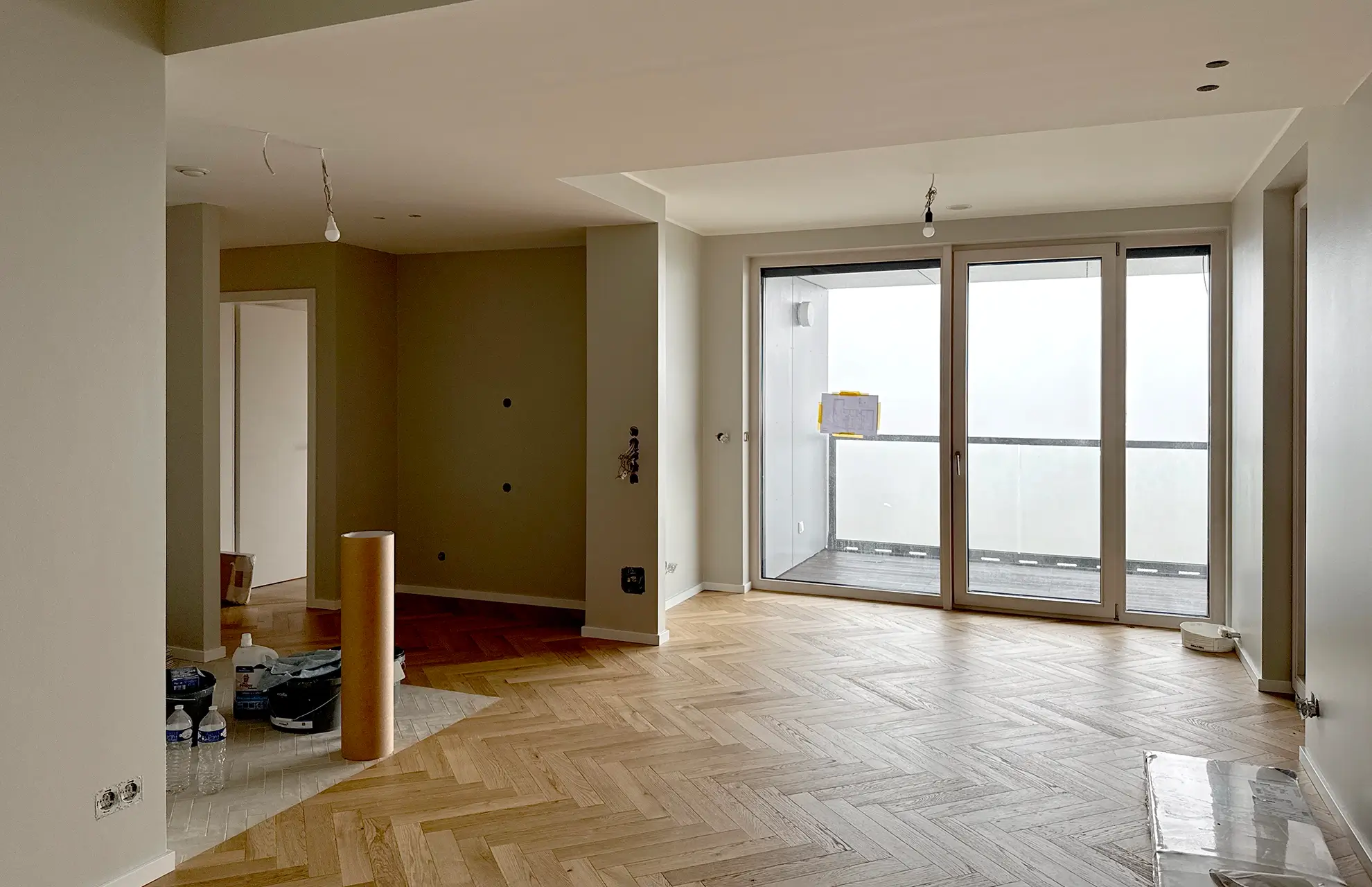
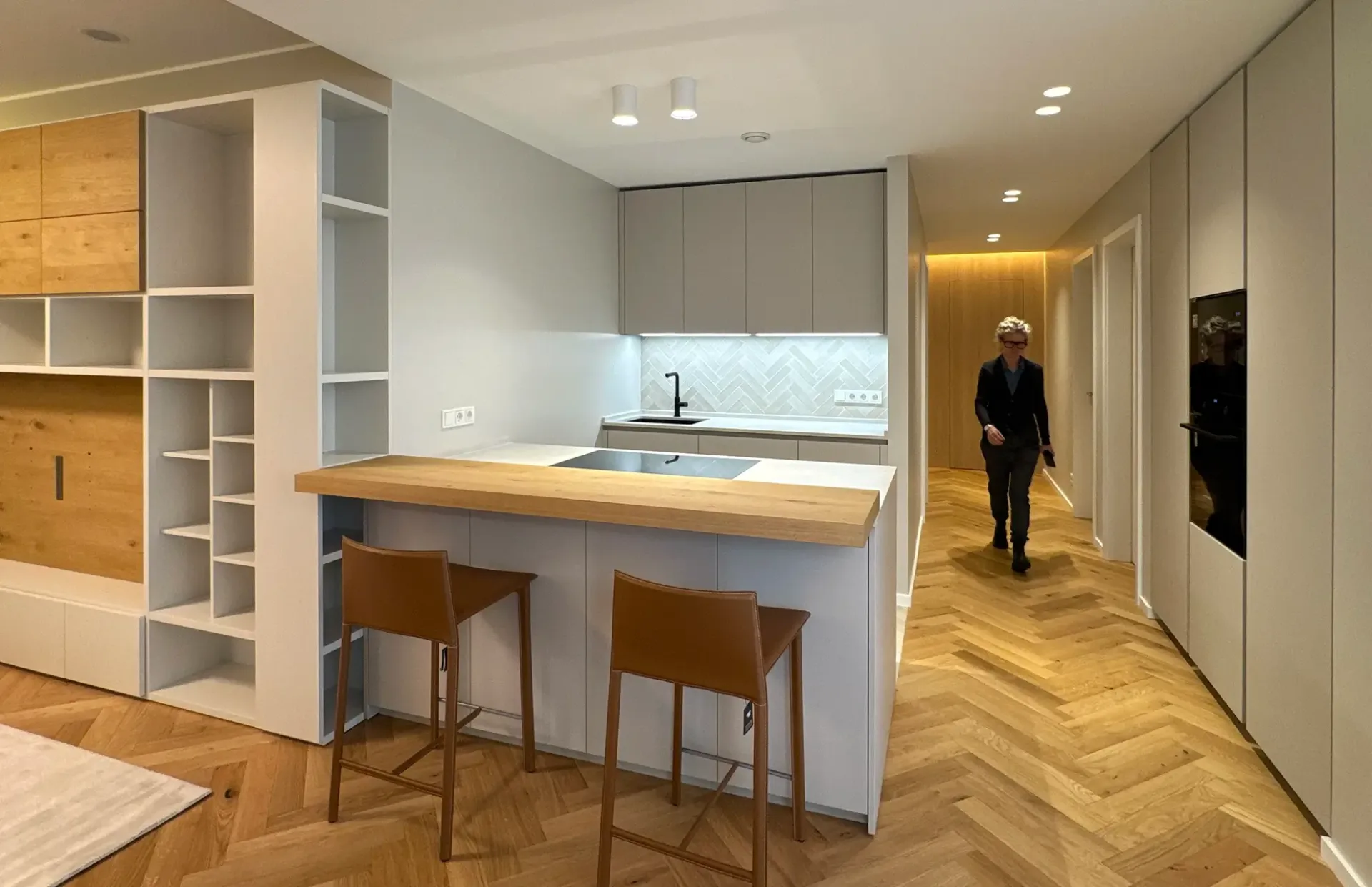
Interior design and space reorganisation in a Fonds Kirchberg apartment
When working on an apartment developed under the Fonds Kirchberg, it is essential to operate within a clearly defined regulatory framework. Structural interventions are not permitted: load-bearing elements, the building envelope and the overall architectural structure must remain unchanged in accordance with the original project specifications.
Meaningful design interventions are still possible within the limits set. Interior design projects may focus on secondary partitions (cloisons non porteuses / non-load-bearing walls), as well as on finishes, built-in elements and bespoke furniture. This approach allows for a thoughtful reorganisation of internal spaces, improved functionality and a fully customised interior fit-out, while respecting the constraints inherent to this type of regulated housing development.
SNHBM
SNHBM (Société Nationale des Habitations à Bon Marché) is one of the main public players offering both location abordable (affordable renting) and access to vente abordable / vente à coût modéré (affordable sale / moderate-cost sale) through programmes and projects across the country.
Key features
| Topic | What it typically means in practice |
|---|---|
| Rental pathway | location abordable with eligibility conditions and ongoing checks |
| Buying pathway | vente abordable and/or vente à coût modéré depending on your eligibility |
| Eligibility | Often based on plafonds de revenus (income ceilings) and “non-ownership” conditions |
| Anti-speculation | Restrictions on subletting; occupancy is usually mandatory |
| Allocation | Availability depends on projects; demand can be high |
| Best for | Households seeking a structured national channel for renting or buying below market |
More info: snhbm.lu
Fonds du Logement
The Fonds du Logement (Housing Fund) is another major public operator focused on logement abordable—both rental and (in many projects) home acquisition models that can include long-term mechanisms designed to keep housing accessible over time.
Key features
| Topic | What it typically means in practice |
|---|---|
| Mission | Develop and manage logement abordable nationally |
| Rent | Affordable rentals with eligibility conditions |
| Buy | Projects can involve protected purchase/resale frameworks |
| Typical rules | Occupancy as main home, restrictions to prevent speculation |
| Best for | People open to several locations and looking for public-sector affordability mechanisms |
More info: fondsdulogement.lu
Logements abordables (Ville de Luxembourg)
The Ville de Luxembourg manages its own housing stock, including logements abordables (affordable rentals) and other municipal rental formats. These are intended for people who cannot reasonably rent at private market rates.
Key features
| Topic | What it typically means in practice |
|---|---|
| Provider | Ville de Luxembourg (municipality) |
| Type | Mostly rental offers (affordable / municipal rentals) |
| Pricing logic | Below private market levels; allocation depends on eligibility and availability |
| Application | Usually via a municipal housing service and a dedicated file |
| Best for | People aiming to stay within Luxembourg City and seeking a municipal channel |
More info: vdl.lu
Programmes des communes
Beyond Luxembourg City, many communes run or co-run housing initiatives (sometimes in partnership with public operators). The mix varies significantly: some focus on rentals, others support acquisition, and procedures may differ from one commune to the next.
| Topic | What it typically means in practice |
|---|---|
| Provider | The commune (municipality) |
| Type | Can include rental, access to purchase, or hybrid models |
| Rules | Vary by commune: eligibility, priority criteria, allocation procedures |
| Advantage | Local pathways may fit households tied to a specific area |
| Best for | People with a preferred commune and willingness to follow local procedures |
More info: visit your commune’s website
Coopératives / habitat participatif
A less “mainstream” route but increasingly relevant: cooperatives and habitat participatif projects aim to reduce cost by changing how housing is financed and managed. Rather than buying a classic property on the open market, you may buy shares or join a structure that gives you the right to occupy a unit under long-term rules.
Key features (summary table)
| Topic | What it typically means in practice |
|---|---|
| Model | Collective structure; sometimes “shares + right to occupy” |
| Cost logic | Lower profit pressure; long-term affordability goals |
| Timeline | Often longer (project-based, not “move in next month”) |
| Governance | More involvement (decision-making, rules, community management) |
| Best for | People prioritising stability, long-term affordability, and community-based living |
More info: vdl.lu
Before taking any step, we strongly recommend checking the most up-to-date information directly on the official websites of the relevant institutions and municipalities. Eligibility criteria, income thresholds, availability of units and the structure of housing programmes may evolve over time in response to regulatory changes or new public policies. Verifying current conditions with the competent authorities will help you avoid misunderstandings and ensure that your application is based on the latest and most accurate requirements.